The Best Home Improvement Loans
What do you mean by home improvement loans?
Home improvement loans are financial products that help homeowners fund renovations, repairs, or remodeling projects on their property. These loans can be used to update outdated features, increase property value, or make necessary repairs to ensure the home remains safe and functional. Home improvement loans are a popular option for homeowners who do not have the cash on hand to cover the cost of renovations upfront.
How do home improvement loans work?
Home improvement loans work similarly to other types of loans, such as personal loans or home equity loans. Homeowners apply for a loan with a lender, who will review their credit history, income, and other financial factors to determine their eligibility and interest rate. Once approved, homeowners receive the funds in a lump sum or as a line of credit, which they can use to pay for their renovation project. Home improvement loans typically have fixed interest rates and monthly payments, making it easier for homeowners to budget for the cost of their project.
What is known about home improvement loans?
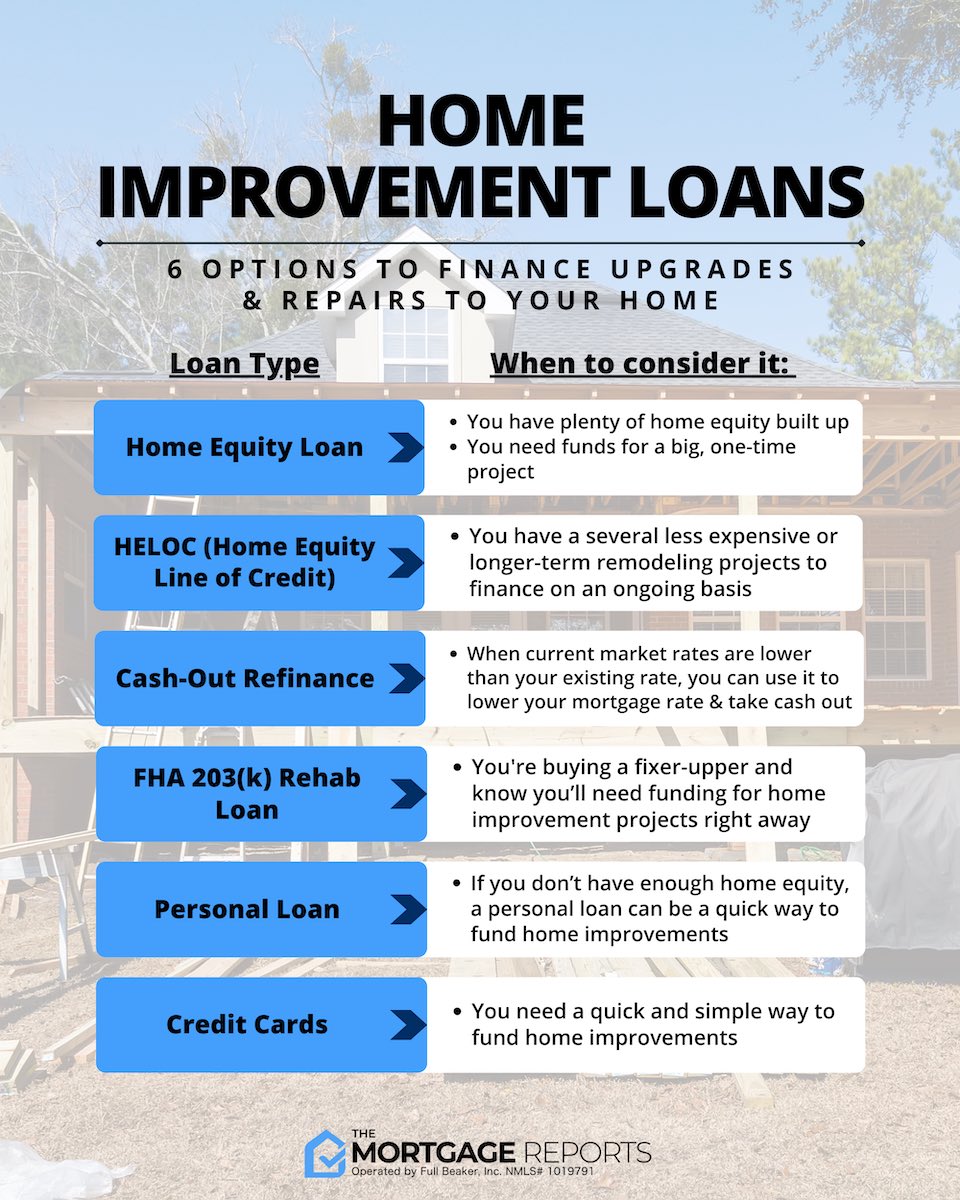
Image Source: themortgagereports.com
Home improvement loans come in various forms, including personal loans, home equity loans, home equity lines of credit (HELOCs), and government-backed loans. Personal loans are unsecured loans that do not require collateral, while home equity loans and HELOCs use the borrower’s home equity as collateral. Government-backed loans, such as FHA 203(k) loans, are insured by the government and offer competitive interest rates for qualifying borrowers. Home improvement loans can range in amount from a few thousand dollars to over $100,000, depending on the lender and the borrower’s financial situation.
Solution for home improvement loans:
When considering a home improvement loan, it’s essential to compare interest rates, terms, and fees from multiple lenders to find the best option for your needs. Homeowners should also consider their current financial situation, including their credit score, income, and existing debt, to determine how much they can afford to borrow. Additionally, homeowners should have a clear plan for their renovation project, including a budget, timeline, and contractor estimates, to ensure they are borrowing the right amount of money and using it effectively. By taking the time to research and compare loan options, homeowners can find the best home improvement loan for their needs and budget.
Information about home improvement loans:
Home improvement loans can be used for a variety of projects, including kitchen remodels, bathroom renovations, basement finishing, roof repairs, and more. These loans can help homeowners increase the value of their property, improve energy efficiency, and create a more comfortable living space for themselves and their families. Home improvement loans are available from banks, credit unions, online lenders, and government programs, making it easy for homeowners to find a loan that fits their needs. By investing in their home through a renovation project, homeowners can enjoy the benefits of a more functional, beautiful, and valuable property for years to come.
Conclusion
In conclusion, home improvement loans are a valuable financial tool for homeowners looking to renovate, repair, or remodel their property. By comparing loan options, planning their project carefully, and working with reputable lenders and contractors, homeowners can create the home of their dreams without breaking the bank. Whether you’re updating your kitchen, adding a new bathroom, or finishing your basement, a home improvement loan can help you achieve your goals and increase the value of your property. Consider your options carefully and choose the best home improvement loan for your needs to make your renovation project a success.
FAQs
1. How can I qualify for a home improvement loan?
To qualify for a home improvement loan, you will need to have a good credit score, stable income, and sufficient equity in your home. Lenders will also consider your debt-to-income ratio and the specifics of your renovation project when reviewing your application.
2. How much can I borrow with a home improvement loan?
The amount you can borrow with a home improvement loan will depend on the lender, your creditworthiness, and the value of your property. Most lenders offer loans ranging from a few thousand dollars to over $100,000 for qualified borrowers.
3. What is the difference between a personal loan and a home equity loan for home improvement?
A personal loan is an unsecured loan that does not require collateral, while a home equity loan uses the borrower’s home equity as collateral. Home equity loans typically have lower interest rates and higher borrowing limits than personal loans, making them a popular option for larger renovation projects.
4. Are there government programs available for home improvement loans?
Yes, there are government-backed loan programs, such as FHA 203(k) loans, that offer competitive interest rates and flexible terms for qualifying borrowers. These programs can be a great option for homeowners looking to finance a renovation project with less-than-perfect credit.
5. How can I find the best home improvement loan for my needs?
To find the best home improvement loan for your needs, compare interest rates, terms, and fees from multiple lenders, and consider your current financial situation and renovation project plans. By doing your research and working with reputable lenders, you can find a loan that fits your budget and goals.
the best home improvement loans